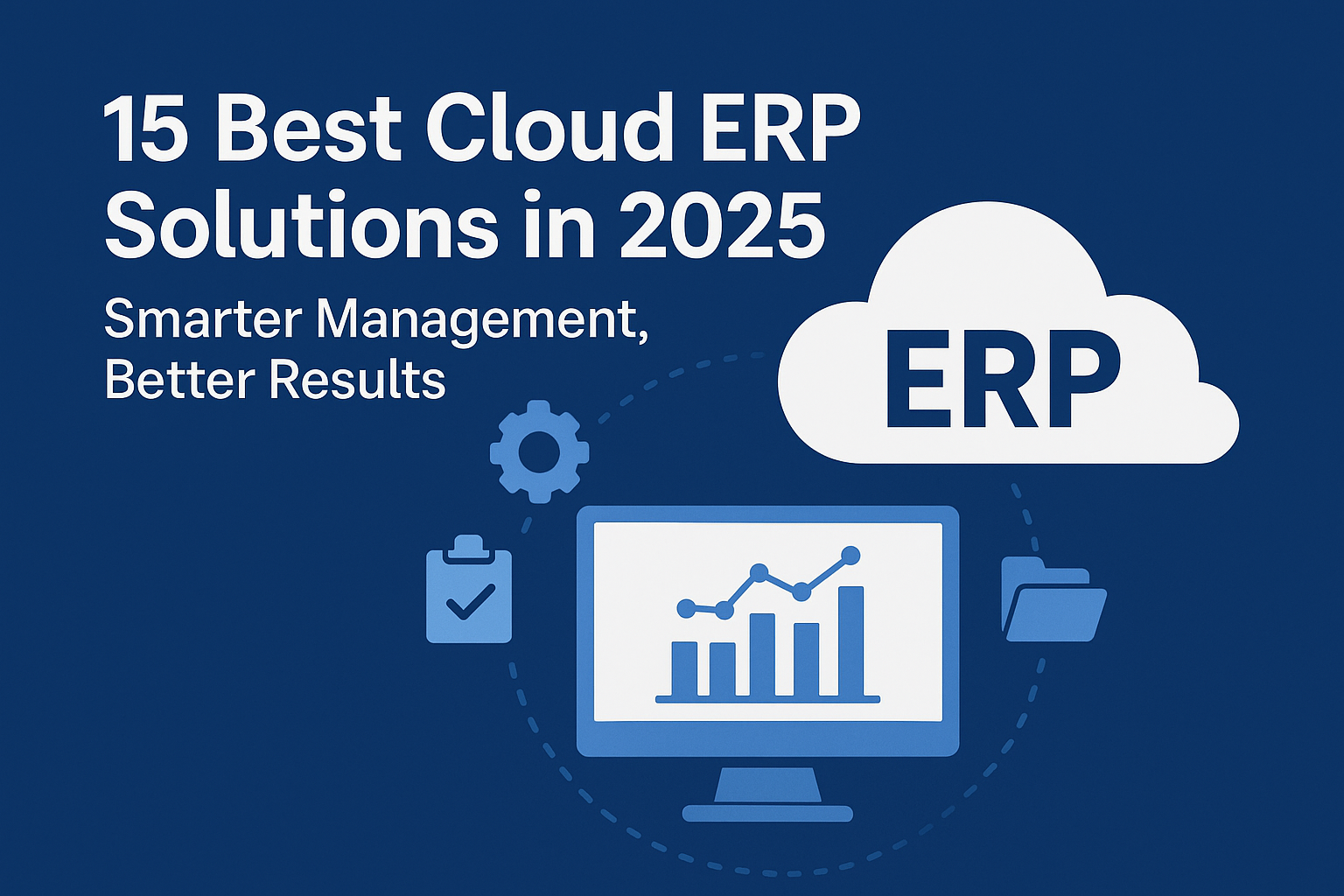
The shift from on-premise ERP systems to cloud-based ERP platforms has been accelerated by digital transformation, remote work, and the need for scalable technology. Cloud ERP is a must-have in 2025, offering smarter management, cost efficiency, and seamless integration. This article highlights the top 15 cloud ERP solutions for 2025, their key features, pricing, and trends shaping the future of business management.
Why Cloud ERP Matters in 2025
- Smarter Management: Centralized dashboards and AI-powered analytics for better decision-making.
- Cost Efficiency: Subscription-based pricing reduces upfront IT investments.
- Flexibility & Scalability: Systems that grow with your business.
- Remote Accessibility: Manage operations anytime, anywhere.
- Integration: Seamless connectivity with CRM, HR, finance, and supply chain software.
15 Best Cloud ERP Solutions in 2025
1. Oracle NetSuite
Best for: Mid-sized to large enterprises
Oracle NetSuite remains a top choice in 2025, offering a unified platform for finance, CRM, eCommerce, and HR.
Key Features:
- Real-time financial planning and reporting.
- Multi-subsidiary and multi-currency support.
- Advanced supply chain management.
- Industry-specific modules.
Pricing: Starts at $99 per user/month.
2. SAP S/4HANA Cloud
Best for: Global corporations
SAP’s S/4HANA Cloud is one of the most powerful ERP platforms, designed for large enterprises with complex global operations.
Key Features:
- In-memory computing for real-time insights.
- AI-driven financial and risk management.
- Integrated logistics and supply chain management.
Pricing: Starts at $1,500/month.
3. Microsoft Dynamics 365 Business Central
Best for: SMEs (Small and Medium Enterprises)
Microsoft Dynamics 365 Business Central is designed for growing businesses seeking affordability and scalability.
Key Features:
- Integration with Microsoft 365 and Power BI.
- Real-time financial management.
- AI-powered supply chain optimization.
Pricing: Starts at $70 per user/month.
4. Infor CloudSuite
Best for: Industry-specific ERP needs
Infor CloudSuite delivers tailored ERP solutions across healthcare, manufacturing, distribution, and retail.
Key Features:
- Preconfigured industry modules.
- Infor Coleman AI for predictive analytics.
- Intuitive dashboards and reporting.
Pricing: Custom pricing based on needs.
5. Acumatica Cloud ERP
Best for: Growing businesses and startups
Acumatica’s resource-based pricing makes it attractive for scaling businesses.
Key Features:
- Unlimited users with consumption-based pricing.
- Open API for integrations.
- Hybrid deployment options.
Pricing: Starts at $1,000/month.
6. Odoo ERP
Best for: Startups and small businesses
Odoo’s open-source flexibility allows businesses to customize ERP to their needs.
Key Features:
- Modular system (CRM, HR, sales, inventory, etc.).
- Strong eCommerce integration.
- Community and enterprise editions.
Pricing: Free community version; enterprise starts at $31/user/month.
7. Workday ERP
Best for: HR and finance-focused enterprises
Workday is renowned for its human capital management and financial planning features.
Key Features:
- AI-driven workforce planning.
- Automated payroll and compliance.
- Real-time financial insights.
Pricing: Subscription-based, custom quotes.
8. Epicor Kinetic
Best for: Manufacturing companies
Epicor Kinetic focuses on manufacturers needing advanced production and supply chain tools.
Key Features:
- Shop floor control and scheduling.
- Supply chain visibility.
- Real-time manufacturing analytics.
Pricing: Custom quotes available.
9. Sage Intacct
Best for: Finance-driven businesses
Sage Intacct is a cloud ERP platform designed primarily for finance and accounting teams.
Key Features:
- GAAP-compliant financial reporting.
- AI-driven cash flow forecasting.
- Advanced accounts payable automation.
Pricing: Starts at $400/month.
10. Syspro ERP
Best for: Manufacturing and distribution SMEs
Syspro offers ERP tailored to manufacturing and distribution businesses.
Key Features:
- AI-powered inventory management.
- Manufacturing resource planning.
- Financial and operational insights.
Pricing: Custom quotes available.
11. IFS Cloud ERP
Best for: Project-centric industries
IFS Cloud focuses on industries like construction, aerospace, and energy.
Key Features:
- Project lifecycle management.
- Asset management and field service tools.
- Strong integration with IoT and AI.
Pricing: Custom pricing.
12. Plex Cloud ERP
Best for: Smart manufacturing
Plex specializes in manufacturing ERP, with cloud-native solutions for Industry 4.0.
Key Features:
- Real-time production monitoring.
- Supply chain automation.
- Quality and compliance management.
Pricing: Starts at $500/month.
13. Rootstock Cloud ERP
Best for: Salesforce users
Rootstock is built natively on Salesforce, making it ideal for businesses already using Salesforce CRM.
Key Features:
- Manufacturing, supply chain, and financial modules.
- Seamless Salesforce integration.
- AI-powered reporting.
Pricing: Custom pricing.
14. Deltek ERP
Best for: Professional services firms
Deltek specializes in ERP for project-based businesses such as consulting and architecture.
Key Features:
- Project accounting and resource planning.
- AI-driven project forecasting.
- Compliance and reporting tools.
Pricing: Custom quotes available.
15. Priority Software ERP
Best for: Flexible business operations
Priority Software offers a flexible ERP platform designed for SMEs across industries.
Key Features:
- End-to-end business management.
- Cloud, hybrid, and on-premise deployment options.
- Strong mobile ERP capabilities.
Pricing: Starts at $50 per user/month.
Key Factors to Consider When Choosing a Cloud ERP in 2025
When selecting the best ERP system for your business, evaluate:
- Business Size: Ensure the solution scales with your company.
- Industry Fit: Look for ERP tailored to your sector.
- Budget: Balance affordability with long-term ROI.
- Integration Needs: ERP should seamlessly connect with your existing tools.
- AI and Automation: Ensure the ERP leverages predictive analytics for smarter decisions.
ERP Trends in 2025: The Future of Smarter Business Management
ERP platforms are evolving rapidly, and the following trends are defining 2025:
- AI-Powered ERP: Predictive analytics for smarter decision-making.
- Hyperautomation: Automating finance, HR, and supply chain workflows.
- Sustainability & ESG Tracking: ERP tools measuring environmental impact.
- Industry-Specific Cloud ERP: Tailored solutions for niche markets.
- Advanced Cybersecurity: Protecting cloud ERP systems from evolving threats.
Final Thoughts
The 15 best cloud ERP solutions in 2025 represent the pinnacle of business management technology, helping companies achieve smarter management and better results. From powerful platforms like Oracle NetSuite, SAP S/4HANA, and Microsoft Dynamics 365 to flexible solutions like Odoo, Acumatica, and Priority Software, there’s an ERP solution for every business model. As businesses continue to adapt to the digital-first economy, adopting the right cloud ERP system will not only streamline operations but also unlock long-term growth and competitive advantage.