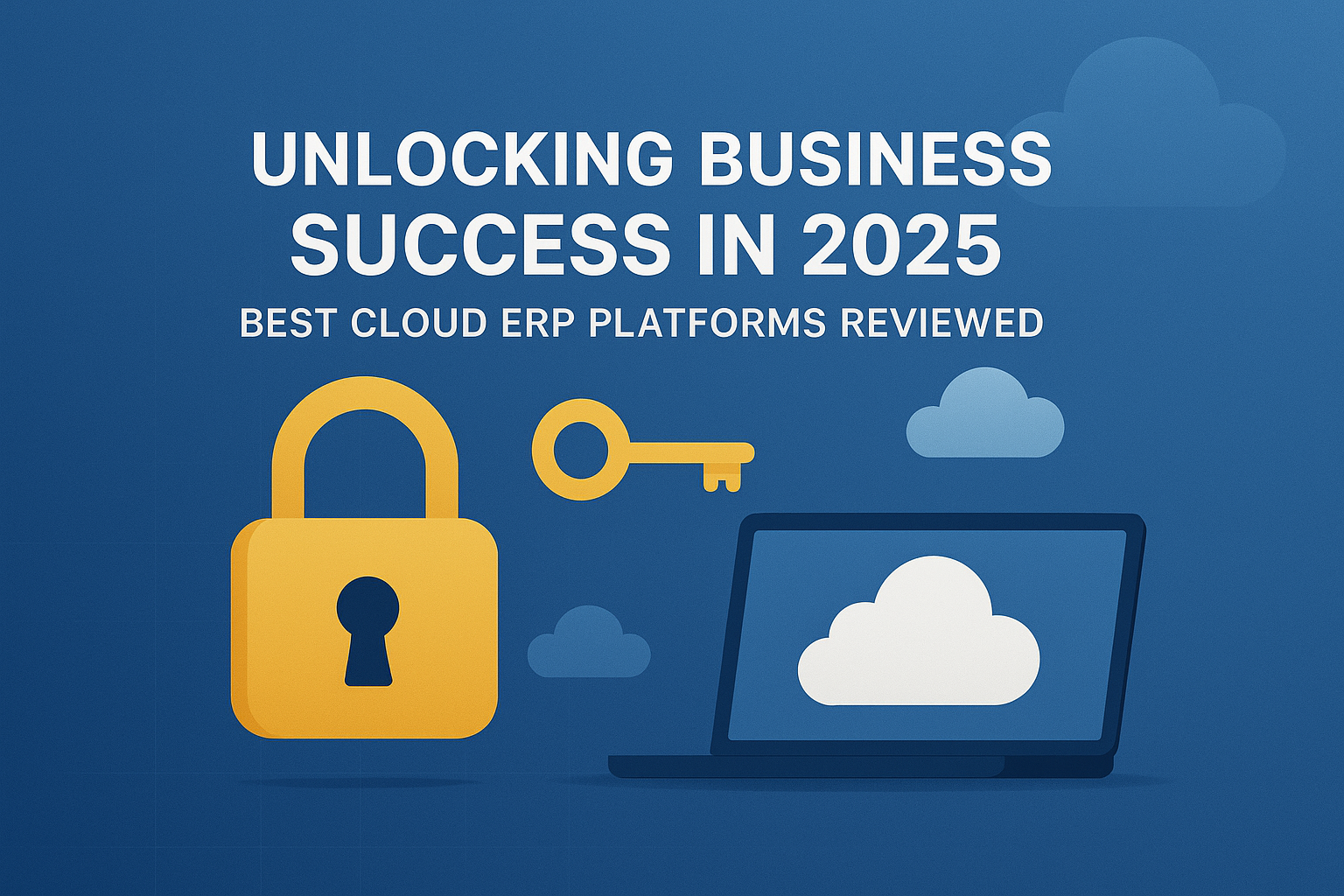
The global shift toward digital transformation has made cloud ERP systems more than just a tool—they are now a strategic necessity. Businesses adopting cloud-based ERP platforms benefit from:
- Scalability: ERP systems that grow with your business.
- Real-Time Insights: Data-driven decision-making powered by AI and analytics.
- Cost Savings: Reduced IT infrastructure costs and predictable subscription pricing.
- Remote Accessibility: Manage operations from anywhere, ensuring agility in hybrid work models.
- Integration Capabilities: Seamless connections with CRM, HR, finance, and supply chain solutions.
By 2025, ERP platforms are not just about managing resources but also about empowering organizations with predictive analytics, machine learning, and process automation.
Top Cloud ERP Platforms in 2025
1. Oracle NetSuite
- Best for: Mid-sized to large enterprises
- Key Features:
- Unified business management suite.
- AI-driven financial forecasting and reporting.
- Advanced inventory and supply chain management.
- Multi-subsidiary and multi-currency support.
- Why It Stands Out: NetSuite is highly customizable, offering industry-specific solutions for retail, healthcare, manufacturing, and more. Its strong analytics and automation features make it a go-to choice for enterprises seeking agility.
- Pricing: Subscription-based, starting around $99 per user/month (custom quotes for enterprise packages).
2. SAP S/4HANA Cloud
- Best for: Large enterprises and global corporations
- Key Features:
- In-memory computing for real-time analytics.
- Integrated supply chain and logistics management.
- AI-powered financial and risk management.
- End-to-end process automation.
- Why It Stands Out: SAP’s strength lies in handling complex, global operations with unparalleled precision. It’s especially effective for industries like manufacturing, automotive, and pharmaceuticals.
- Pricing: Enterprise-level pricing, starting at $1,500/month (varies by company size and requirements).
3. Microsoft Dynamics 365 Business Central
- Best for: Small and Medium Enterprises (SMEs)
- Key Features:
- Deep integration with Microsoft 365 and Power BI.
- Financial management and intelligent reporting.
- Supply chain and warehouse optimization.
- AI-driven customer insights.
- Why It Stands Out: Its seamless integration with Microsoft Office apps makes it a favorite for businesses already using the Microsoft ecosystem. Easy scalability ensures it grows with your business.
- Pricing: Plans start at $70 per user/month.
4. Infor CloudSuite
- Best for: Industry-specific solutions
- Key Features:
- Industry-specific workflows and preconfigured modules.
- AI-powered analytics with Infor Coleman AI.
- Advanced supply chain planning and execution.
- Intuitive user interface.
- Why It Stands Out: Infor’s deep industry expertise allows businesses to deploy faster and achieve ROI quicker compared to generalized ERP solutions.
- Pricing: Custom pricing based on business needs.
5. Acumatica Cloud ERP
- Best for: Growing businesses and startups
- Key Features:
- User-based pricing instead of per-user fees.
- AI-powered financial and inventory management.
- Flexible deployment options (cloud, on-premise, hybrid).
- Open API for integrations.
- Why It Stands Out: Acumatica’s unlimited user pricing model makes it a cost-friendly choice for growing businesses. Its adaptability ensures smooth scaling as companies expand.
- Pricing: Starting around $1,000/month (based on resources, not users).
6. Odoo ERP
- Best for: Small businesses and startups
- Key Features:
- Modular system (choose apps you need: CRM, sales, inventory, HR, etc.).
- Community and enterprise versions available.
- Strong eCommerce and digital marketing integrations.
- Mobile-friendly design.
- Why It Stands Out: Its open-source model allows businesses to customize extensively. Ideal for startups seeking a low-cost ERP solution with flexibility.
- Pricing: Community version is free; enterprise starts at $31/user/month.
7. Workday ERP
- Best for: HR and Finance-Focused Enterprises
- Key Features:
- AI-powered workforce planning and talent management.
- Real-time financial insights.
- Payroll and benefits automation.
- Seamless compliance management.
- Why It Stands Out: Workday excels in human capital management (HCM), making it the top choice for HR-centric organizations.
- Pricing: Subscription-based, custom quotes available.
Comparison Table: ERP Platforms in 2025
| ERP Platform | Best For | Key Strengths | Pricing (est.) |
|---|---|---|---|
| Oracle NetSuite | Mid-sized to large enterprises | Unified suite, AI forecasting, multi-subsidiary support | $99+/user/month |
| SAP S/4HANA Cloud | Large enterprises | Real-time analytics, AI automation, global operations | $1,500+/month |
| Microsoft Dynamics 365 | SMEs | Microsoft integration, scalable, AI insights | $70+/user/month |
| Infor CloudSuite | Industry-specific companies | Preconfigured modules, AI analytics | Custom pricing |
| Acumatica Cloud ERP | Growing businesses, startups | Usage-based pricing, flexible deployment | $1,000+/month |
| Odoo ERP | Small businesses, startups | Open-source, modular, affordable | Free (community); $31+/user/month (enterprise) |
| Workday ERP | HR and finance-focused enterprises | AI workforce planning, compliance tools | Custom quotes |
Choosing the Right Cloud ERP in 2025
When selecting an ERP system, consider the following:
- Business Size & Industry: Some ERP platforms cater better to small businesses, while others excel in managing large global enterprises.
- Scalability: Ensure the system grows with your business.
- Integration Needs: Look for ERP platforms that seamlessly integrate with your existing tools.
- Budget: Weigh subscription costs against long-term ROI.
- Customization: Industry-specific modules can save time and money.
The Future of Cloud ERP: Trends to Watch in 2025
Cloud ERP platforms are rapidly evolving. Here are the key trends shaping 2025 and beyond:
- AI and Machine Learning: Predictive insights for smarter decision-making.
- Hyperautomation: Automating complex workflows across finance, HR, and supply chain.
- Industry-Specific ERP: Tailored solutions for niche industries.
- Sustainability Tracking: ERP platforms integrating ESG (Environmental, Social, Governance) compliance.
- Cybersecurity Enhancements: Advanced cloud security to protect sensitive business data.
Final Thoughts
In 2025, choosing the best cloud ERP platform can determine how efficiently your business operates and how effectively it scales. From industry giants like SAP and Oracle NetSuite to flexible solutions like Odoo and Acumatica, there’s an ERP platform suited for every business model.
Cloud ERP is no longer just about managing resources—it’s about enabling business agility, resilience, and success in a highly competitive digital marketplace. If your business hasn’t yet embraced ERP, 2025 is the year to take the leap and unlock your full growth potential.